
ABOUT THE BGR FRAMEWORK

This framework sets out how to deliver high-quality public realm and placemaking designs efficiently and consistently. It provides practical tools to guide decision-making, ensuring every intervention is purposeful, future-proofed, and capable of sustaining long-term performance and maintenance.
Who this framework is for
This framework is intended for everyone involved in designing and delivering public spaces, including Nottingham City Council officers, design review panels, developers, contractors, and applicants.
It should be used by anyone proposing, assessing, or managing spaces that are accessible to the public.
When this framework should be used
This framework applies from the earliest stages of design through to post-occupancy.
It should be used continuously throughout the process to ensure that design intent is maintained, quality is not diluted, and outcomes meet the expected standards for public realm delivery.
Regular reference to this framework is essential to secure consistent and effective placemaking.
What this framework is not
This framework does not operate in isolation. It must be used alongside other relevant policies, strategies, and technical guidance to ensure alignment with national, regional, and local standards.
Key supporting documents include the Greener, Healthier, Happier Green Space Strategy and the Design Quality Framework, which provide detailed guidance on green infrastructure, highways, buildings, and public realm design.
This framework also does not guarantee a favourable planning outcome. Planning decisions will consider a range of factors. However, proposals that conflict with this framework are likely to be viewed less favourably and may prejudice the granting of permission.
Key aims of this framework
- Embed collaboration from the outset, ensuring all relevant place-making disciplines and long-term management partners shape design decisions.
- Drive consistent, high-quality delivery of public realm design, through clear priorities that translate the Nottingham Vision 2050 into tangible, on-the-ground outcomes.
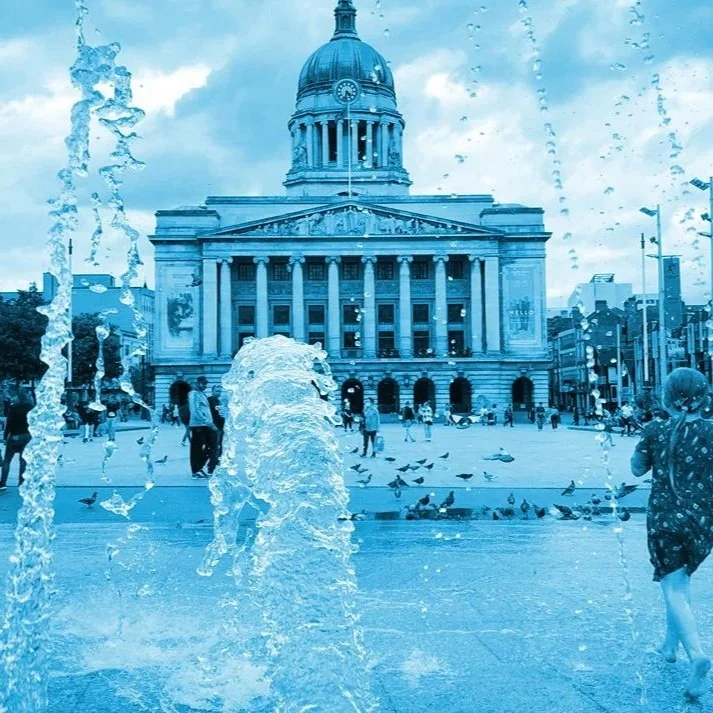
BLUE INFRASTRUCTURE
is the network of both natural, semi-natural and man-made water networks, encompassing features such as lakes, rivers, streams, ponds and sustainable drainage systems. In an urban context, blue infrastructure makes rainfall an asset, achieving multiple environmental, social and economic benefits using nature’s potential, whilst managing wider climate hazards and flood risk.
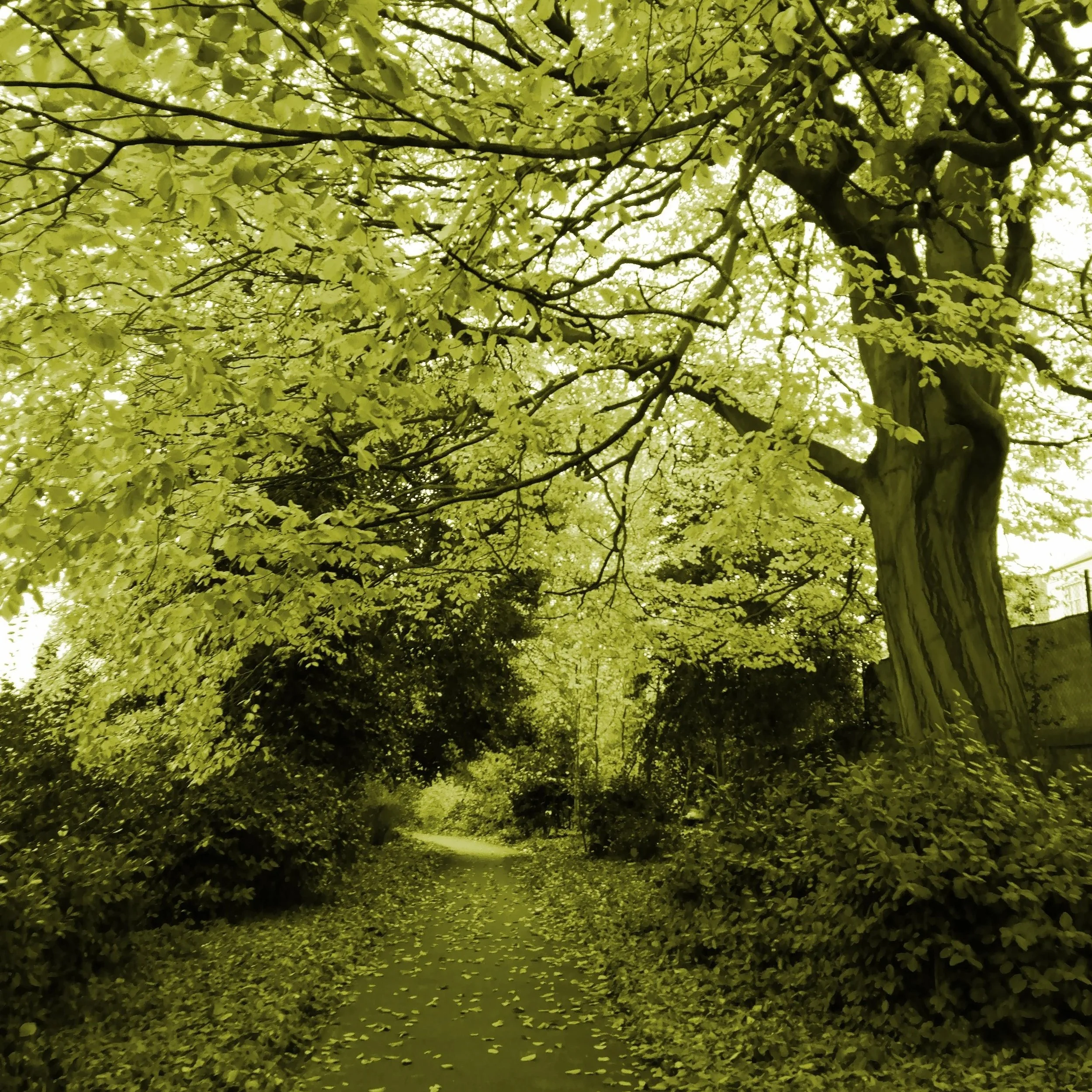
GREEN INFRASTRUCTURE
is the network of multi-functional green and blue spaces and other natural features, urban and rural, which is capable of delivering a wide range of environmental, economic, health and wellbeing benefits for nature, climate, local and wider communities and prosperity.
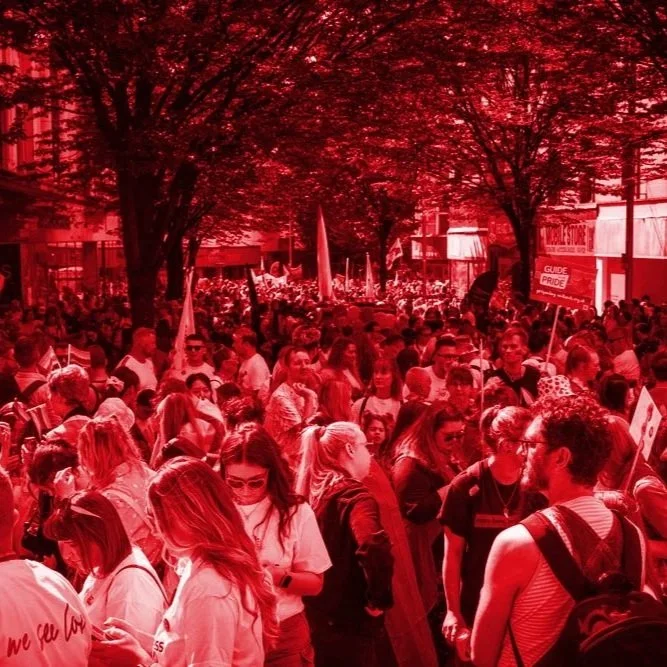
RED INFRASTRUCTURE
Forms the connected network of public spaces that enable people to meet, socialise and participate in everyday life—supporting the social ecosystems that sustain communities. Identifying assets and opportunities for human activity is critical to directing investment and creating place-based catalysts for economic growth and regeneration.